(Courtesy of the Library of Congress )

Americans have always been ambivalent about unearned wealth: the Protestant work ethic inevitably tempered by vague hopes of getting rich quick. This ambivalence even shaped the nation's politics. From the Early Republic's fights over the Bank of the United States to the Credit Mobilier Scandal of the 1860s, Americans repeatedly--but sporadically--turned to politics to rein in the wealthy who used, in Supreme Court justice Louis Brandeis's words, "other people's money" for their own enrichment.
This effort reached a peak in the "Progressive Era" of the early twentieth century. Publicity furthered reform as muckraking journalists and more respectable types like Brandeis exposed the advantages taken by wealthy speculators. In 1912 Congress investigated the malfeasance of corporate America, even calling the imperious J.P. Morgan as a witness, in its Pujo Committee hearings.
State legislatures, meanwhile, were passing the first stock exchange regulation measures. These were called "blue sky laws" because stock swindlers were believed to be not above selling "building lots in the blue sky." Reflecting the advice of Brandeis, who wrote that "sunlight is the best disinfectant," these laws sought to expose the machinations of speculators. The first blue sky law, passed by Kansas in 1911, ordered that securities be registered and that dealers be licensed. Within two years twenty-three states followed this lead, but dishonest dealers discovered that they could escape prosecution simply by using the mails to make offerings across state lines.
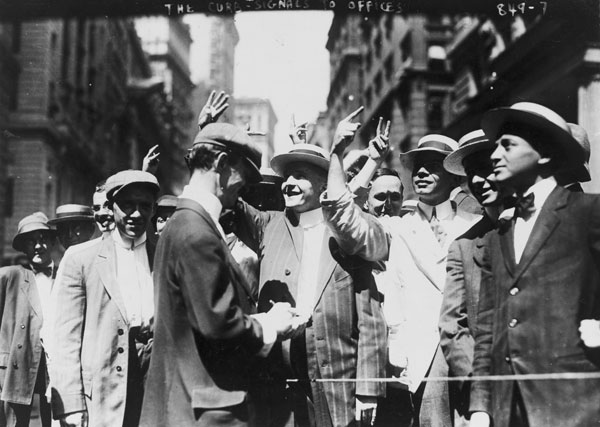
Despite its domination by a few insiders with uncommon access to information, even the New York Stock Exchange adopted registration provisions, but un unscrupulous dealers got around them by selling "unlisted" securities "over-the-counter" or on the "curb exchange." Despite these efforts at reform, for most Americans, entering financial markets remained akin to gambling--but through the 1920s Americans were, characteristically, of two minds as to whether that was a good or bad thing.