431 Days: Joseph P. Kennedy and the Creation of the SEC

Building an Institution

The Chairman and First Principles

FDR made the appointments to the SEC on June 30, 1934. The choice of Kennedy for Chairman scandalized liberals across the country, most of whom had assumed that Landis would get the job. New Deal liberal Jerome Frank likened the appointment to "setting a wolf to guard a flock of sheep." (Seligman, 107) Journalists were ruthless: the Scripps-Howard chain tried to stop the nomination before it happened, and Wall Street critic John T. Flynn, in his New Republic column (which ran under the Brandeis phrase "Other People's Money") said, "I say it isn't true. It is impossible. It could not happen."

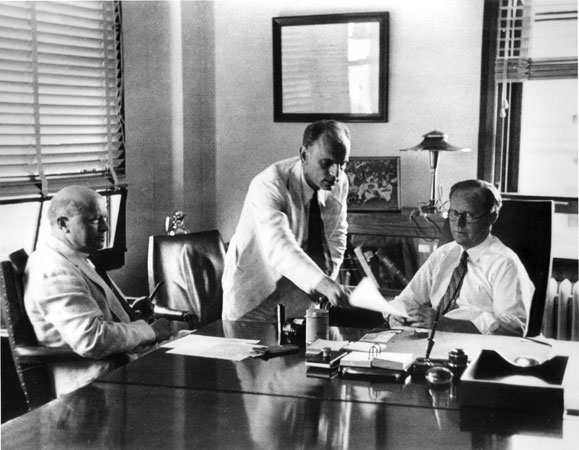
Ferdinand Pecora, named a Commissioner by FDR, was no happier. On July 3 he arrived in Washington and made it clear that he would be Chairman or he would leave. But Kennedy had already met with Landis and won him over. Weighing his own experience with Kennedy's, Landis realized that only the latter had the knowledge, connections, and stature to lead the agency. Landis made peace between Pecora and Kennedy, who emerged smiling for the swearing-in and picture taking.

Kennedy's personality--forceful, confident, but always with an easy smile--served him well. Journalists took to the optimistic SEC Chairman, and favorable coverage helped spread the message. Kennedy also proved his commitment to cooperation by embarking on endless rounds of conferences with exchange officials, accountants, and brokers.

The "cards have been stacked too close to those who have power... the Federal government is the only power which can assure to the buyer that he is purchasing gold value and not gold bricks."

Kennedy welcomed the appointment, hoping to make a name for himself and for his family. But most importantly, he believed in the mission of the SEC. The "cards have been stacked too close to those who have power," he explained, insisting that "the Federal government is the only power which can assure to the buyer that he is purchasing gold value and not gold bricks." (Wall Street Journal, July 4, 1934, and February 18, 1935) He knew that the Commission would have its limits and that it could not act as a peremptory prosecutor and judge and instinctively understood the value of regulation by disclosure, not on ideological grounds but because he believed it would work. After all, Kennedy realized, the SEC could never have the resources to police every aspect of the markets--it would have to see that the exchanges policed themselves.

Granting that, Kennedy's vision for the SEC centered around a simple objective--he would have to prove to businessmen, traders, exchange officials, and the public that the markets were better off with the SEC than without it.
<< Previous | Next >>


Related Museum Resources

Papers

July 6, 1934
Letter from George E. Pimley to Joseph P. Kennedy supporting his appointment to the SEC [Transcription] (with permission of the John F. Kennedy Library Foundation)
July 14, 1934
Letter from Joseph P. Kennedy to Bart A. Brickley [Transcription] (with permission of the John F. Kennedy Library Foundation)
July 18, 1934
John T. Flynn - "Other People's Money," The New Republic [Image] (with permission of The New Republic)
July 18, 1934
John T. Flynn - "Other People's Money," The New Republic [Transcription] (with permission of The New Republic)
July 20, 1934
Letter from Ted Bulkeley, Spencer Trask & Co., to Joseph P. Kennedy [Image] (with permission of the John F. Kennedy Library Foundation)
July 20, 1934
Letter from Ted Bulkeley, Spencer Trask & Co., to Joseph P. Kennedy [Transcription] (with permission of the John F. Kennedy Library Foundation)
July 24, 1934
Letter from Herbert Bayard Swope to Joseph P. Kennedy on drafting, in consultation with Raymond Moley, the National Press Club speech [Transcription] (with permission of the John F. Kennedy Library Foundation)
July 25, 1934
Telegram from Joseph P. Kennedy to Robert Fisher [Image] (courtesy of the National Archives)
July 25, 1934
Telegram from Joseph P. Kennedy to Robert Fisher [Transcription] (courtesy of the National Archives)
July 25, 1934
Telegram from Joseph P.Kennedy to John F. Forbes [Image] (courtesy of the National Archives)
July 25, 1934
Telegram from Joseph P.Kennedy to John F. Forbes [Transcription] (courtesy of the National Archives)
July 30, 1934
Letter from A.A. Berle, Jr. to Joseph P. Kennedy [Transcription] (with permission of the John F. Kennedy Library Foundation)
August 1, 1934
Letter from Joseph P. Kennedy to A.A. Berle, Jr. [Transcription] (with permission of the John F. Kennedy Library Foundation)
August 7, 1934
Telegram from Joseph P. Kennedy to Roger Babson [Image] (courtesy of the National Archives)
August 7, 1934
Telegram from Joseph P. Kennedy to Roger Babson [Transcription] (courtesy of the National Archives)
November 6, 1934
Letter from Louis Wiley, The New York Times, to President Roosevelt on meeting with Joseph P. Kennedy [Image] (with permission of the Franklin Delano Roosevelt Library and Museum)
November 6, 1934
Letter from Louis Wiley, The New York Times, to President Roosevelt on meeting with Joseph P. Kennedy [Transcription] (with permission of the Franklin Delano Roosevelt Library and Museum)
November 21, 1934
Telegram from Joseph P. Kennedy to Felix Frankfurter [Image] (courtesy of the Library of Congress)
November 21, 1934
Telegram from Joseph P. Kennedy to Felix Frankfurter [Transcription] (courtesy of the Library of Congress)
November 22, 1934
Letter from Joseph P. Kennedy to Senator D.V. Fletcher on his financial arrangements while in government service [Transcription] (with permission of the John F. Kennedy Library Foundation)

Photos

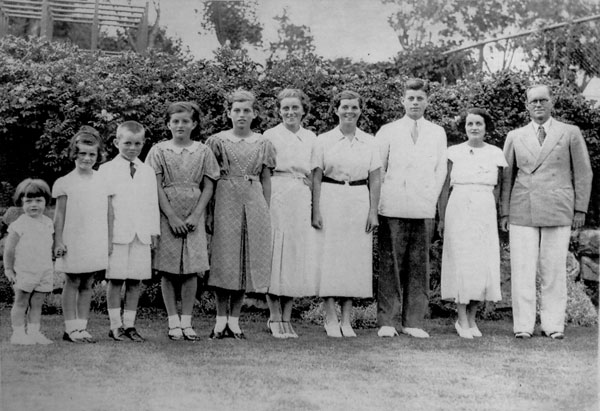
  • Kennedy Family (1934) (Courtesy of the Washington Evening Star Collection, Washingtoniana Division, D.C. Public Library)
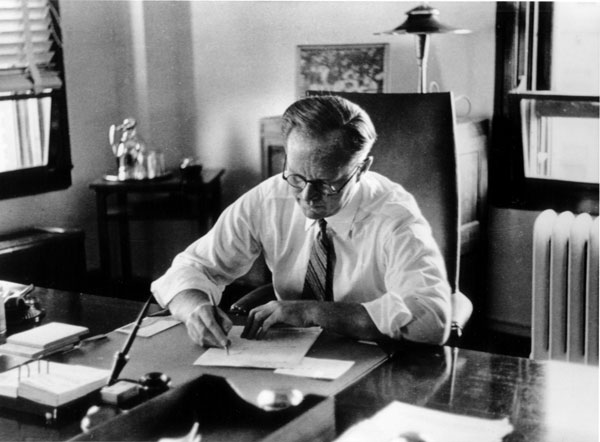
  • Kennedy, Joseph P. (July 1934) (With permission of the John F. Kennedy Library Foundation)
  • SEC Commissioners (July 1934) (With permission of the John F. Kennedy Library Foundation)

Audio /Visual