The Bright Image: The SEC, 1961-1973

Growing Political Concerns

Chairman Budge

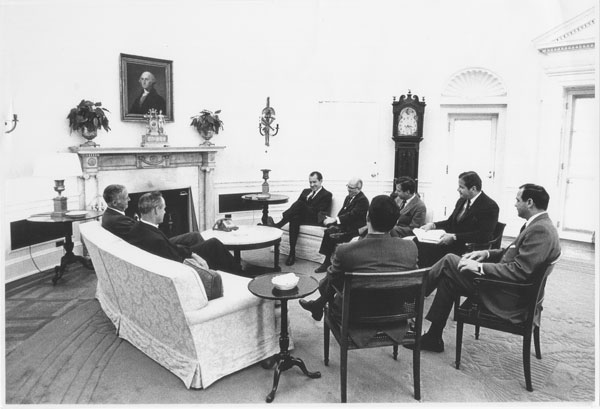
Hamer Budge with President Richard M. Nixon in the Oval Office. Courtesy of Hamer Budge

Chairman Cohen had led the SEC through some of its most difficult years, employing political skill and legal acumen to rebuild the intellectual and political foundations of the agency.

When Richard M. Nixon was elected President in 1968, Cohen was serving the last year of his five-year term. In February 1969, Cohen was dismissed as Chairman; Commissioner Hamer H. Budge was appointed to replace him. Cohen then resigned from the Commission.

The Budge appointment was criticized by the strongest SEC supporters in Congress. Fearful that the agency would be weakened by Nixon's political appointees, the Senate challenged Budge's credentials and experience at his confirmation hearing. Supporters of a strong regulatory scheme remained skeptical of self-regulation and feared that the weakening of the SEC could harm the agency's effectiveness as the nation's economic and market system grew more diverse, complex and international.

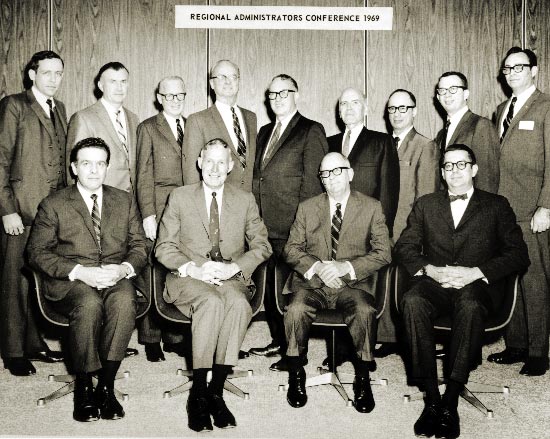
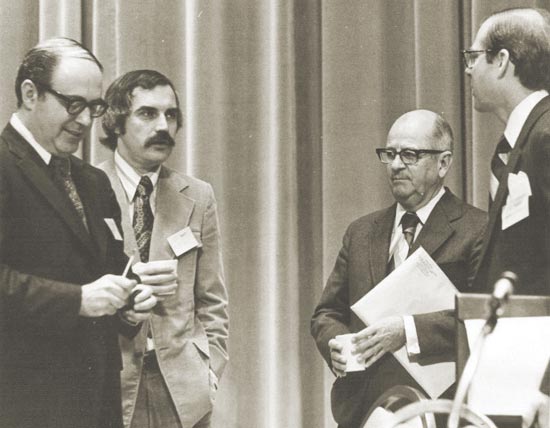
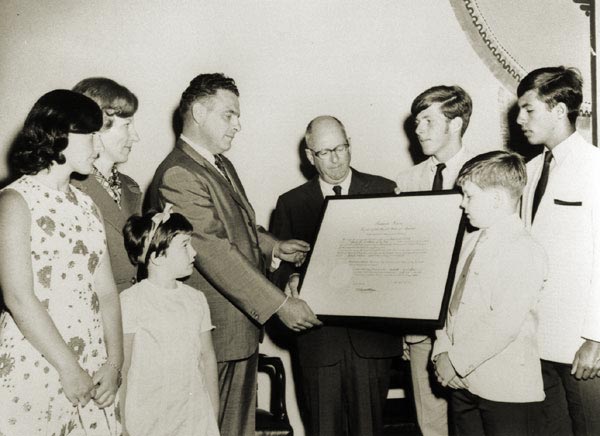
Hamer Budge (second from right); Alan Levenson (far left); Richard Rowe (second from left); and Andrew Steffan (far right). Courtesy of Richard Rowe

Budge proved to be a capable, if less activist, Chairman. A former five-term Idaho Congressman, he preferred that major decisions concerning the securities industry be made by Congress or the federal courts instead of by administrative rule. Despite that attitude, in Budge's two years as Chairman, the SEC made considerable progress in dealing with the broker-dealer back-office crisis that arose when tremendous numbers of stock transactions could not be completed for days after the sale.

In addition, three new securities acts -- the Securities Investors Protection Act, the Investment Company Act Amendments, and the Williams Act Amendments -- were passed in 1970 during his tenure. The SEC also initiated new studies of the stock market that would provide the basis for the establishment of an electronically linked national securities market system in the ensuing years.
<<Previous | Next >>

Related Museum Resources

Papers

June 22, 1964
Memo from Ralph A. Dungan to President Johnson on preparation of Hamer Budge for Senate confirmation hearing [Transcription] (Courtesy of the Lyndon B. Johnson Library and Museum)
May 19, 1969
"An Agenda for the Securities Industry" - Remarks of Robert W. Haack, New York Stock Exchange to the Economic Club of Detroit [Image] (All rights are owned exclusively by NYSE Euronext (copyright) 2007 NYSE Euronext, All Rights Reserved, courtesy New York Stock Exchange Archives)
July 7, 1969
Memo from Paul W. McCracken to Harry Dent on "Wall Street Political Problems" article by Dick Garbett [Transcription] (Courtesy of the Nixon Presidential Library & Museum)
October 16, 1969
Memo from William Safire describing Jawboning vs. Backboning [Transcription] (Courtesy of the Nixon Presidential Library & Museum)
1970
U.S. Securities and Exchange Commission Annual Report [Transcription] (Government Records)
January 12, 1970
Memo from Peter Flanigan to Dwight Chapin on appointment of Harold Boeschenstein to chair American Enterprise Institute [Transcription] (Courtesy of the Nixon Presidential Library & Museum)
September 1970
U.S. Securities and Exchange Commission Employee Bulletin (courtesy of Richard Rowe)
November 20, 1970
Memo from Donald Rumsfeld to John Ehrlichman on economic indicators [Transcription] (Courtesy of the Nixon Presidential Library & Museum)
November 20, 1970
Memo from Secretary of the Treasury David Kennedy to President Nixon on new dimension in economic policy [Transcription] (Courtesy of the Nixon Presidential Library & Museum)
December 4, 1970
Memo from Paul W. McCracken to President Nixon with talking points on business conditions [Transcription] (Courtesy of the Nixon Presidential Library & Museum)
December 30, 1970
Memo from John D. Ehrlichman to George Schultz recommending release of economic data at politically advantageous times [Transcription] (Courtesy of the Nixon Presidential Library & Museum)

Photos